5 Best Laptops for Video Editing by Workload in 2026
As an Amazon Associate, this website earns from qualifying purchases.
The short answer
Video editing wants 24GB to 32GB of memory, a strong GPU or Apple silicon, a color-accurate screen and 1TB of fast storage. The MacBook Pro 14 with M5 Pro is the best all-rounder. On Windows, pick an RTX 5070 or higher laptop.
The best laptops for video editing keep a timeline smooth while you scrub, preview effects in real time, and export without making you wait. That comes down to memory, the graphics hardware your editing app uses, fast storage and a screen you can trust for color.
Short answer: aim for 24GB to 32GB of memory, Apple silicon or an NVIDIA RTX 5070 or higher, a color-accurate screen and at least 1TB of storage. A MacBook Pro with an M5 Pro chip is the best all-round editing laptop. On Windows, choose an RTX 5070 or higher laptop with an OLED screen.
Apple M5 Pro chip with a 15-core CPU and 16-core GPU
14.2-inch Liquid Retina XDR screen
24GB unified memory and a 1TB SSD
Wi-Fi 7
Keep in mind: Windows-only engineering tools and most PC games will not run natively.
Product details checked September 2026
We compare these models side by side, with full specs and buying links, in the roundups linked below.
The MacBook Pro 14 with M5 Pro has a 15-core CPU, a 16-core GPU and 24GB of unified memory, with a very bright Liquid Retina XDR display. It runs Final Cut Pro, DaVinci Resolve and Premiere Pro. See it in our best laptops for programming roundup, where we cover its specs.
#2. ASUS ROG Zephyrus G16 (RTX 5070): Best Windows Editing Laptop
RTX 5070 laptop GPU with an Intel Core Ultra 9 285H
16-inch 2.5K OLED screen at 240Hz with 100% DCI-P3 color
About 0.59 inches thin and 4.08 lb
Keep in mind: thin designs run the GPU at a lower power limit than thicker gaming laptops.
Product details checked September 2026
The Zephyrus G16 pairs an RTX 5070 with an Intel Core Ultra 9 285H and a 16-inch 2.5K OLED screen that ASUS lists at 100% DCI-P3 with a Delta E under 1, a measure of color accuracy. It is thin and light for its power at 4.08 pounds, with Thunderbolt 4, HDMI 2.1 and an SD card reader. See it in our best laptop for college and gaming roundup.
#3. Razer Blade 16 (2026, RTX 5070 Ti): Best Premium Windows Editing Laptop
Keep in mind: you pay a premium for the build, and the memory is soldered.
Product details checked September 2026
The 2026 Blade 16 pairs an RTX 5070 Ti with 32GB of memory and a 16-inch OLED at 240Hz with 100% DCI-P3, Calman Verified color and VESA DisplayHDR True Black 1000. Thunderbolt 5 and an SD card reader suit fast media workflows, and two M.2 slots allow up to 8TB of storage. See it in our best gaming laptops roundup.
#4. Lenovo Legion Pro 7i Gen 10 (RTX 5080): Best for Heavy Rendering
Keep in mind: heavy and power hungry, so it lives on a desk more than in a bag.
Product details checked September 2026
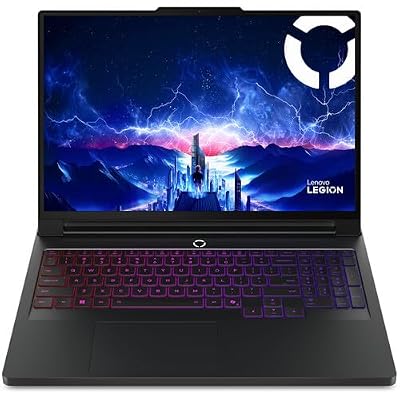
For long renders and heavy effects, the Legion Pro 7i Gen 10 pairs an RTX 5080 with an Intel Core Ultra 9 and an OLED screen. It is a desk machine, not a travel laptop. See it in our best gaming laptops roundup.
#5. Lenovo ThinkPad P16s Gen 4: Best Big-Screen Workstation
16-inch 4K OLED touch screen with 100% DCI-P3 color
AMD Ryzen AI 7 PRO 350
32GB DDR5 memory and a 1TB SSD
Keep in mind: a work machine with integrated graphics, not a gaming laptop.
Product details checked September 2026
The ThinkPad P16s Gen 4 has 32GB of DDR5, a 1TB SSD and a 16-inch 4K OLED touchscreen covering 100% of DCI-P3. It uses integrated graphics, so it suits lighter editing and color review rather than heavy GPU effects. See it in our best laptops for programming roundup.
Factors to consider when choosing a laptop for video editing
Memory. Editing apps cache frames and effects in memory. 16GB is enough for 1080p. 24GB to 32GB makes 4K timelines much smoother.
Graphics. On Windows, the GPU accelerates effects, color grading and exports in apps like Premiere Pro and DaVinci Resolve. On a Mac, Apple silicon's GPU and media engines do the same job.
Processor. More cores help with exports and some effects. Any current Pro-class Apple chip or high-end Intel or AMD chip is strong.
Storage. Footage is huge. Keep 1TB or more inside and edit from a fast external SSD over Thunderbolt or USB4.
Screen. A color-accurate screen, ideally covering 100% of DCI-P3, shows your grade as viewers will see it. OLED and mini-LED screens also help with HDR work.
Ports. Thunderbolt or USB4 for fast drives, an SD card reader for camera cards, and HDMI for a reference monitor.
Cooling. Long exports push a laptop hard. Thin laptops can slow down during long renders.
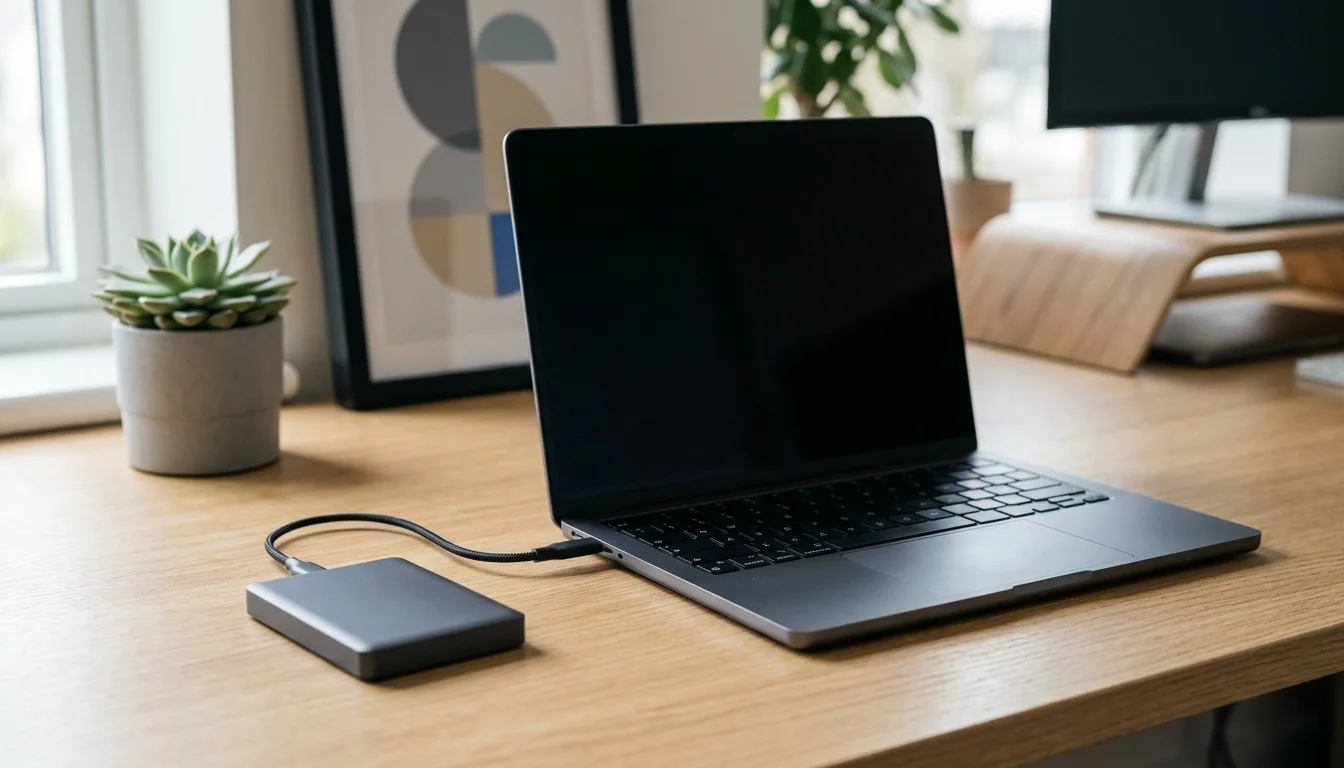
Video footage fills drives quickly. Keep at least 1TB inside the laptop for your apps, cache and current project. Store and edit footage on a fast external SSD connected over Thunderbolt or USB4, and archive finished projects on a larger drive. An SD card reader, like the ones on the Zephyrus G16 and Razer Blade 16, saves carrying a separate reader for camera cards.
Screens for Editing
Color accuracy matters as much as sharpness. Look for a screen that covers 100% of DCI-P3 if you grade video for the web or streaming. OLED panels offer deep blacks and strong HDR, which helps when you edit HDR footage. If color is critical for client work, calibrate the screen with a hardware calibrator and check your grade on a second display.
Mac or Windows for Video Editing?
Choose a Mac if you use Final Cut Pro or want long battery life with strong performance. Choose Windows if you use DaVinci Resolve with an NVIDIA GPU, need Windows-only plugins, or also want to game on the same laptop. Premiere Pro and DaVinci Resolve run on both.
Editing Setup Tips
Edit from a fast external SSD over Thunderbolt or USB4, and keep the internal drive for apps and cache.
Use proxy files for 4K and above. Most editors create them automatically and they make timelines far smoother.
Plug in while exporting. Laptops cut power on battery.
Calibrate your screen if color matters for client work.
Keep the vents clear during long renders.
By Budget and Level
Students and beginners editing 1080p: a laptop with 16GB of memory and a mid-range GPU, such as the ones in our best laptop for college and gaming roundup.
Creators editing 4K: 24GB to 32GB of memory and an M5 Pro or RTX 5070 or higher.
Professionals with heavy grading or 6K and 8K: the most memory and GPU you can afford, often with a desktop at the studio.
The best laptops for video editing pair 24GB to 32GB of memory with strong graphics, a color-accurate screen and fast storage. The MacBook Pro 14 with M5 Pro is the best all-round editing laptop. On Windows, the ASUS ROG Zephyrus G16 with an RTX 5070 and OLED screen is the pick for most creators, the Razer Blade 16 adds more power and a brighter HDR screen, and the Lenovo Legion Pro 7i Gen 10 handles the heaviest renders. For photo-focused work, see our best laptop for photo editing guide.
16GB handles 1080p editing. For 4K timelines, multiple streams or effects-heavy work, 24GB to 32GB is much smoother. Heavy color grading and 6K or 8K footage can use more.
Is a MacBook good for video editing?
Yes. Apple silicon includes dedicated media engines that speed up common video codecs, and Final Cut Pro, DaVinci Resolve and Premiere Pro all run on macOS. A MacBook Pro with a Pro or Max chip is one of the best editing laptops available.
Do I need a dedicated GPU for video editing on Windows?
It helps a lot. Premiere Pro and DaVinci Resolve use the GPU for effects, color work and exports. An NVIDIA RTX 5070 or higher is a strong target for 4K editing.
Is a gaming laptop good for video editing?
Often, yes. Gaming laptops have strong GPUs, fast processors and good cooling. Choose one with a color-accurate screen and enough memory, and use an external SSD for footage.