
PC Builds
PC Builder: Plan Your Gaming PC Build and Budget
The short answer
Split your budget before you shop: on a gaming build, the graphics card should take the largest share, roughly two fifths of the money, followed by the processor and motherboard. Then pick parts that match those targets. Then check compatibility part by part and follow a step-by-step build guide.
Last updated September 2026
| GPU | 38 to 42% of a gaming build |
|---|---|
| CPU | 16 to 22% |
| Board | 11 to 12% |
| RAM, SSD, PSU | 6 to 8% each |
| Checked | 25 Sep 2026; shares, not prices |
Scroll for more →
What's covered8
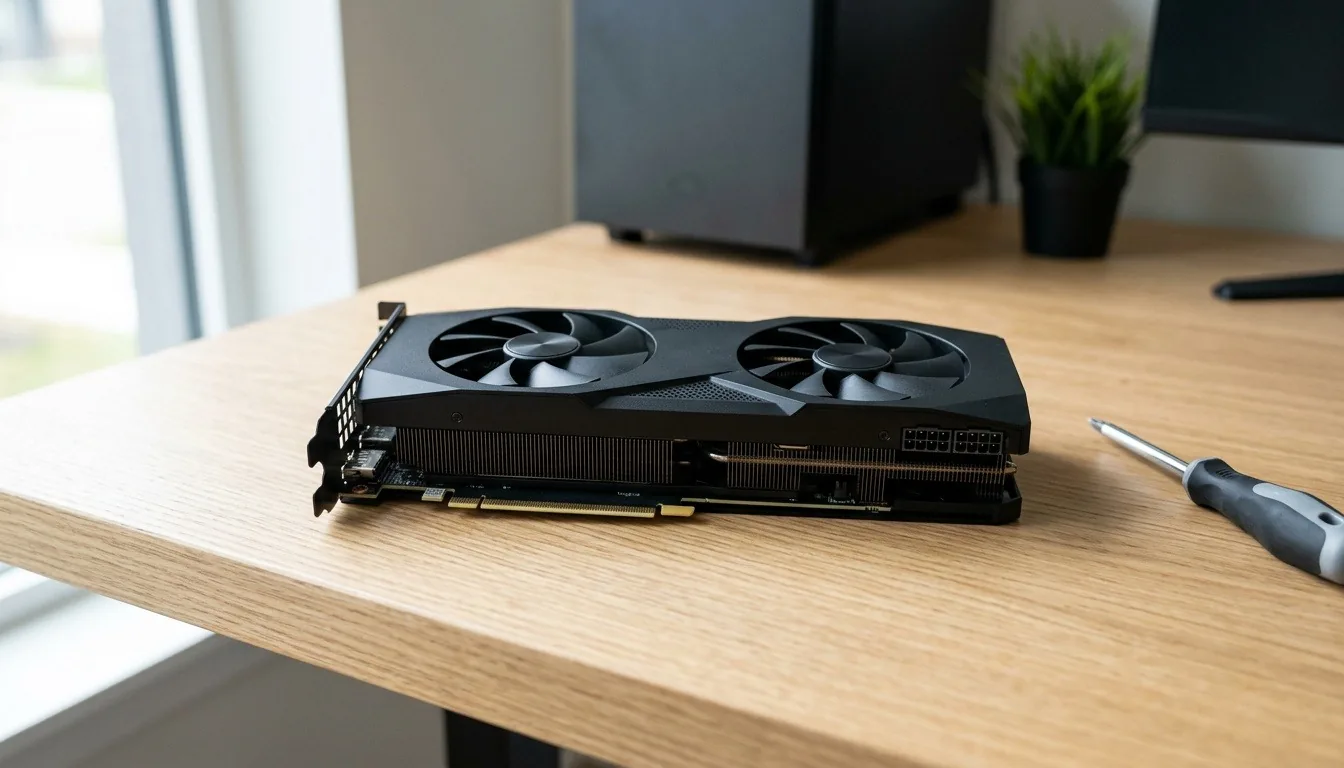
A PC builder starts with one question: where the money should go. Get the split right and even a modest budget makes a fast gaming PC. Get it wrong and you end up with a powerful processor held back by a weak graphics card, or a great GPU on a power supply that can't feed it.
Short answer: give the graphics card the largest share, about two fifths of a gaming build, then the processor and motherboard. Use the planner below to turn your budget into a target for each part.
Start with the budget, then use the linked building guides to choose compatible parts and assemble the machine.
PC Builder Budget Planner
Enter your total budget and pick a build goal. The planner shows a target amount for each part. These shares are our planning model, last checked on 25 September 2026. They are not prices.
| Build goal | Graphics card | Processor | Motherboard | Memory | Storage | Power supply | Case | CPU cooler |
|---|---|---|---|---|---|---|---|---|
| 1080p gaming on a budget | 38% | 16% | 12% | 8% | 8% | 8% | 6% | 4% |
| Balanced 1440p gaming | 42% | 18% | 11% | 7% | 7% | 7% | 5% | 3% |
| High refresh and streaming | 40% | 22% | 11% | 8% | 7% | 6% | 4% | 2% |
Scroll for more →
These are PC4U planning heuristics, not benchmark results or current component prices. The planner multiplies the PC-only budget by each selected part share, rounds each dollar target to the nearest $5 and may show target totals that differ slightly from the entered budget. These planning shares are not Steam survey data. For a separate dated view of what participating Steam users reported, see our August 2026 Steam PC hardware snapshot.
| Part | Share | Target |
|---|---|---|
| Graphics card | 42% | $420 |
| Processor | 18% | $180 |
| Motherboard | 11% | $110 |
| Memory | 7% | $70 |
| Storage (SSD) | 7% | $70 |
| Power supply | 7% | $70 |
| Case | 5% | $50 |
| CPU cooler | 3% | $30 |
Scroll for more →
Targets are in US dollars and rounded to the nearest $5. Windows, a monitor and accessories are not included.
Rather buy than build: see the ready-made PCs for this goal.
See our best gaming PC picksGraphics cards from NVIDIA's RTX 50 series and AMD's Radeon RX 9000 series are the current choices for new builds.
We checked those official GPU-family pages on 28 September 2026 as product references. They do not produce the budget shares: the three goal rows are PC4U planning models that allocate the full PC-only budget across the listed parts, then round each displayed dollar target to the nearest $5. They are not benchmark-derived or current prices.
How to Use the Planner
- Set your total budget for the PC itself. Leave the monitor, Windows and accessories out.
- Pick your goal. Budget 1080p builds put a little more into the power supply and case to keep them reliable. Streaming builds put more into the processor, which handles video encoding alongside the game.
- Treat each number as a target, not a limit. If a great graphics card is slightly over its target, take a little from the case or cooler.
- Never cut the power supply below its target. It protects every other part.
Why the Graphics Card Gets the Largest Share
In almost every game, the graphics card decides your frame rate. A faster processor helps less once it is fast enough to keep the GPU busy. That is why a balanced gaming build spends roughly twice as much on the GPU as on the processor. Streaming builds shift a little toward the processor, because it works harder when you broadcast.
Your Next Steps
Choose your parts. Our PC build guide explains how to pick each part and check that they work together.
See a budget example. Our budget PC build guide lays out a complete low-cost build by tier.
Build it. Our how to build a gaming PC guide walks through assembly step by step.
Compare builder tools and services. Our gaming PC builder guide compares part-picker tools with custom-build services if you would rather configure than assemble.
Should You Build or Buy?
Building lets you choose each part, including the case and power supply. Assembly takes time and care. A prebuilt machine can offer one warranty for the system. Compare our prebuilt gaming PC guide and budget desktop choices if you prefer a complete computer.
Common Budget Mistakes
Overspending on the processor. A top-tier CPU with a mid-range GPU wastes money in games.
Cutting the power supply. A cheap unit can fail and damage other parts.
Forgetting Windows and peripherals. Budget for a Windows license, a monitor and accessories separately.
Buying a case that is too small. Check graphics card length and cooler height before you order.
Verdict: How to Use a PC Builder Plan
Start with the budget split. A good PC builder plan gives the graphics card about two fifths of the money and the processor about a fifth, and never cuts the power supply. Use the planner to turn your budget into targets, then follow our PC build guide to pick compatible parts and our step-by-step guide to build it.
Before replacing the operating system, plan a supported Windows installation.
For a desktop with limited upgrade money, check an affordable graphics-card upgrade.
If the graphics card is the main upgrade, weigh a mid-range GPU purchase.
To complete the desk setup, choose mouse and keyboard fit and controls.
For a storage upgrade, check SSD types and storage compatibility.
For a graphics card that also handles everyday work, choose graphics-card features for your workload.
Before ordering memory or a processor, check motherboard support and RAM upgrades.
More hardware and setup guides
- SLI and CrossFire: Compatibility, Limits and Single-GPU Alternatives
- Official Windows Installation, Upgrade Choices and USB Media
- Choosing a Monitor: Gaming, Photo Editing, Mac Connections and HDR
- Windows Security: Built-In Protection, Free Suites and Buying Criteria
- Affordable Graphics Cards for 1080p: New and Used Buying Checks
- Mid-Range Graphics Cards: Balancing Workload, Memory and Power
- Router Buying and Wi-Fi Setup for a PC Household
- VPNs for PC Owners: Privacy, Remote Access and Gaming Trade-Offs
- Choosing a CPU for Gaming and Everyday PC Work
- PC and Phone Backups: Contacts, Messages, Cloud Storage and Reset Checks
- Choosing a Graphics Card: Workloads, Upgrades and Older Desktop Models
- Rooting an Android Phone: Risks and Safer Alternatives
FAQ
How does the PC builder planner work?
Enter your total budget and pick a build goal. The planner multiplies your budget by our suggested share for each part, so you know roughly how much to spend on the graphics card, processor and everything else before you start comparing parts.
Why does the planner use percentages instead of prices?
Part prices change often, sometimes daily. The share of a budget each part should take changes much more slowly, so percentages stay useful for longer. Use the planner's numbers as targets, then compare current prices.
What part should get the most money in a gaming PC?
The graphics card. It decides frame rates in almost every game. On a gaming build, it should take roughly two fifths of the total budget.
Is it hard to build a PC?
Less than most people expect. If you can follow instructions and handle small screws, you can build a PC in an afternoon. Our step-by-step guide walks through every part.