3 Cheap but Good Gaming PCs and Which Corners Are Safe to Cut in 2026
As an Amazon Associate, this website earns from qualifying purchases.
The short answer
A cheap but good gaming PC saves money on the processor, the case, the lighting and the extras, never on the graphics card, memory or power supply. An RTX 5060 or RTX 3050 desktop with 16GB of memory and a named power supply gets that balance right.
A cheap but good gaming PC is all about where the savings come from. Cut in the right places and a low-cost desktop plays games well for years. Cut in the wrong places and it stutters on day one.
Short answer: save on the processor, the case and the lighting, and skip extras you don't need. Never save on the graphics card, the memory or the power supply. A cheap gaming PC with a named GPU, 16GB of memory and a rated power supply plays games well for its tier.
Keep in mind: the RTX 3050 6GB struggles in new games above low to medium settings.
Product details checked September 2026
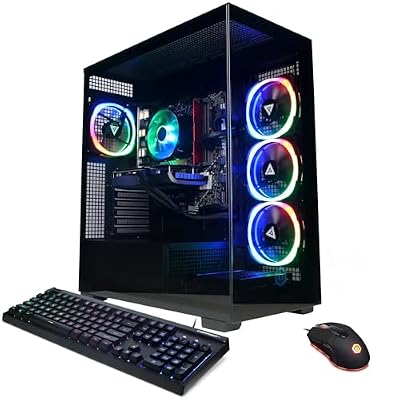
The same 6GB RTX 3050 tier as the Skytech, but on a newer Ryzen 5 8400F platform with 16GB of DDR5 and a 1TB NVMe SSD, plus a keyboard and mouse. It cuts on the GPU while keeping a better path to a faster processor later.
Factors to consider when choosing a cheap gaming PC
The processor. For 1080p gaming, a current six-core chip is enough. You don't need a top-tier processor to feed a budget graphics card.
The case. A plain case with a mesh front cools as well as a flashy one. Glass panels and lighting add cost, not frames.
RGB lighting. It looks nice but does nothing for performance.
Bundled accessories. A PC without a keyboard and mouse is not worse. You may already own better ones.
Wi-Fi. If you can run an Ethernet cable to your router, a wired connection is steadier anyway.
Corners You Should Never Cut
The graphics card. It decides what you can play. A cheap PC with integrated graphics only is not a gaming PC. An RTX 3050 is the practical floor, and an RTX 5060 is the value target.
Memory. 16GB is the floor. 8GB causes stutter once other apps run in the background.
The power supply. It feeds every part. An unnamed, low-quality unit is the part most likely to fail, and it limits future GPU upgrades. Look for a named unit with an 80 PLUS rating.
Corners to Cut With Care
Storage. A 500GB SSD works but fills up after a few big games. Start at 1TB if you can, or plan to add a drive later.
The motherboard platform. Older DDR4 platforms are cheaper and game fine, but newer DDR5 platforms give a better path to a faster processor later.
Verdict: How to Get a Cheap but Good Gaming PC
A cheap but good gaming PC saves on the processor, case, lighting and extras, and keeps a named dedicated GPU, 16GB of memory and a named power supply. The Skytech RTX 3050 system is a sensible floor, and the CyberPowerPC Gamer Master is the better buy if you can reach the RTX 5060 tier. For the tightest budgets, read our gaming PC under $500 guide.
FAQ
What makes a cheap gaming PC good?
A named dedicated graphics card, 16GB of memory, a 1TB SSD and a named power supply. A cheap PC that has those four things will play games well for its tier.
What should I not cut on a cheap gaming PC?
The graphics card, the memory and the power supply. A weak GPU limits every game, 8GB of memory causes stutter, and a poor power supply is the part most likely to fail.
Is a cheap processor OK for gaming?
Yes. A current six-core processor, such as a Ryzen 5 5500 or Ryzen 5 8400F, is enough for 1080p gaming with a budget GPU.
Is a 4GB graphics card enough for a cheap gaming PC?
It is enough for light esports titles, but it runs out of room quickly in newer games. A 6GB or 8GB card is a safer floor if your budget allows.